


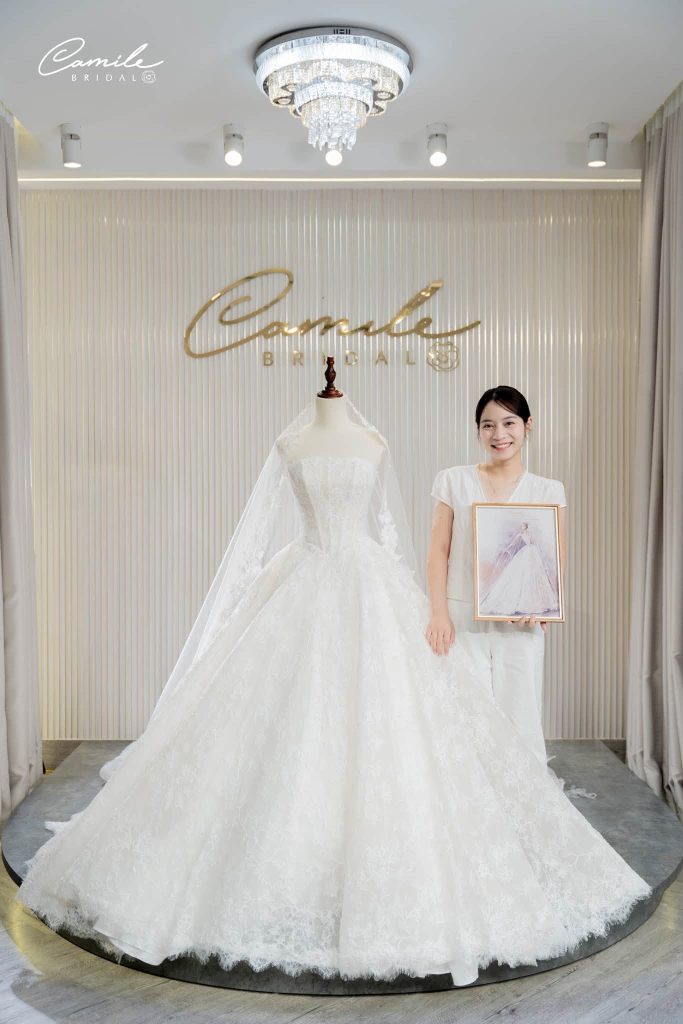
When a bride searches for a wedding dress tailor near me, she is often at one of two moments: she has found a gown she loves but something does not sit correctly, or she has not found the gown because the image in her mind does not exist in standard stock. Tailoring sits between those two worlds—refining what already exists and creating what needs to be built around the bride.
The primary search phrase for this article is wedding dress tailor near me, but the purpose is not to repeat a keyword until it becomes visible. The purpose is to answer the questions that sit behind the search: how to judge quality, how to understand fit, how to compare options and how to know when an existing Camile design or a made-to-measure direction deserves a closer look.
Camile Bridal’s collections are useful throughout this guide because they offer different design languages rather than one repeated bridal formula. A bride can move from soft romance to sculptural restraint, from timeless lace to fairytale volume, without leaving the same design house. That makes the collections practical references for understanding preference, not simply products to mention at the end.
1. Understand the difference between alterations and redesign
At first glance, wedding dress tailor near me can seem like a simple style decision. In practice, this part of bridal shopping shapes how the bride moves, how the gown photographs and how naturally she can inhabit the day. Alterations refine fit within the logic of an existing gown. Redesign changes the creative structure. A bride should know which type of work she is actually asking for before agreeing on timeline and cost.
In a fitting, this should be tested rather than assumed. Look at the gown from the front, side and back, then walk, sit and turn. Notice where the fabric begins to pull, where the waist naturally settles and whether the dress still feels composed once the bride stops holding a perfect pose. The most revealing moment is often not the mirror photograph; it is the first unguarded movement.
Camile offers a useful reference point here. The Maker illustrates this idea in a concrete way: The Maker Collection is built around the creative process itself: sketching, material selection, repeated testing, draping and refinement. Its design language values balance between silhouette, fabric, structure and the emotion of wearing the gown rather than decoration for decoration’s sake. The collection should not be treated as a rule for every bride; it is better used as a visual example of how design choices can be combined with a coherent point of view.
This is where personal taste matters more than any universal formula. A bride may love the very feature another woman would remove. Confidence does not always look quiet; sometimes it looks like volume, sparkle or a neckline that takes up space. The fitting is successful when the design feels intentional on the woman who will actually wear it.
2. Bodice adjustments require more than taking in a seam
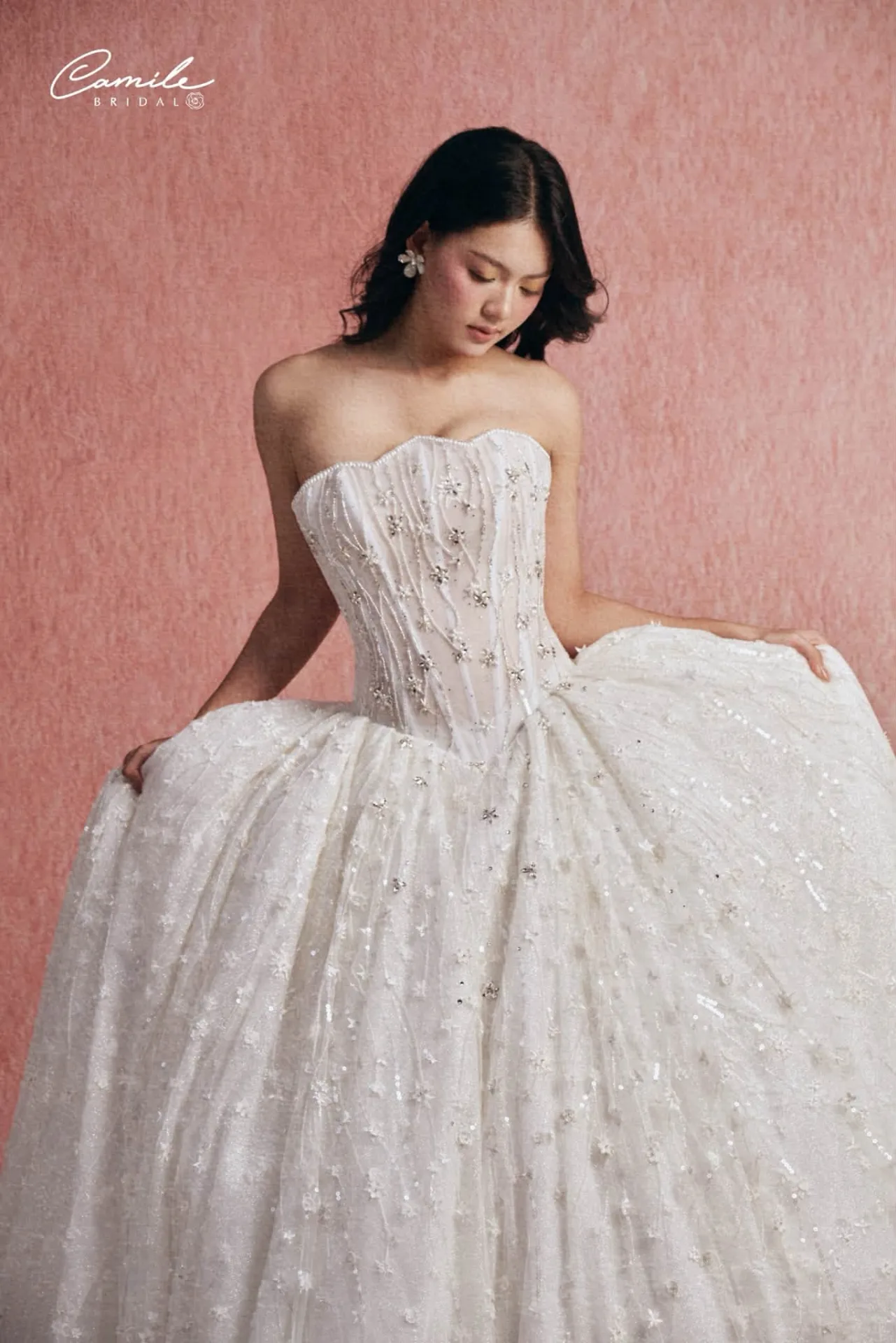
There is a technical side to wedding dress tailor near me, but there is also an emotional one. A bride is not choosing a diagram; she is choosing the outline she will recognise in photographs years later. Bust depth, corset shape, neckline tension and waist placement work together. Changing one point can affect the entire upper-body balance.
For decision-making, separate what is structural from what is decorative. Structure includes support, waist placement, seam position, skirt weight and movement. Decoration includes lace motifs, flowers, sequins and accessories. A bride can change decoration more easily than she can rescue poor structure, so fit should be evaluated first.
Camile offers a useful reference point here. Scarlett illustrates this idea in a concrete way: Scarlett Collection is more regal and self-assured, using corset-defined waists, sequins, lace, stones and silhouettes that range from ball gowns to mermaid shapes. The collection frames confidence as part of bridal beauty. The collection should not be treated as a rule for every bride; it is better used as a visual example of how design choices can be combined with a coherent point of view.
There is no need to decide from the first emotional reaction. A bride can take a photograph, step out of the gown, try a contrast and then return. Often the most meaningful design is the one she understands more clearly after comparison rather than the one that creates the loudest first impression.
3. Hem and train work should be done with real shoes
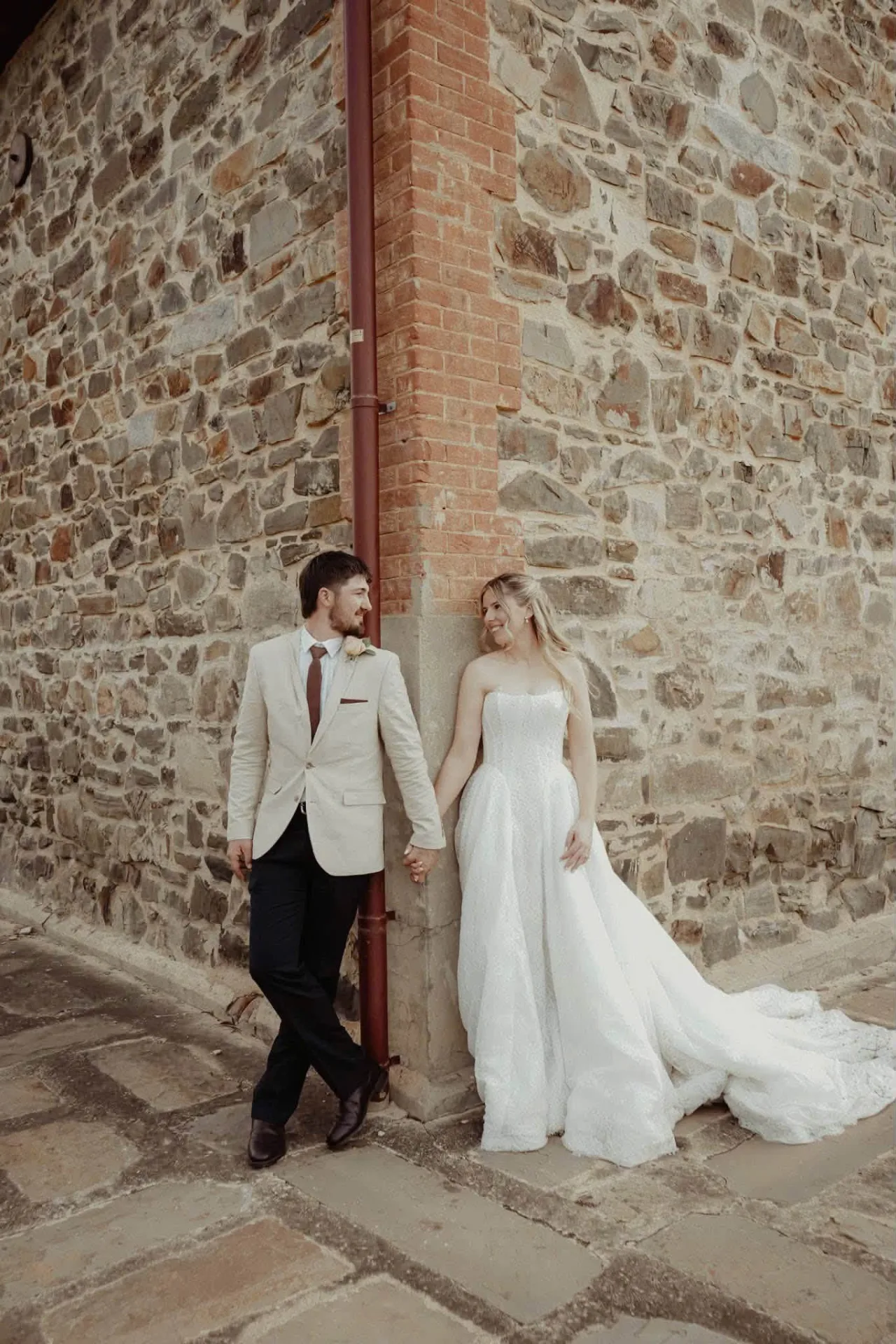
The most useful way to think about wedding dress tailor near me is to move beyond rules. Instead of asking what a bride is supposed to wear, ask what the design is doing for proportion, comfort and atmosphere. Heel height changes the front length and posture. Train adjustments also need to consider how the bride will walk, bustle or move through the venue.
The appointment becomes more useful when the bride arrives with a short list of priorities rather than a long list of prohibitions. She might say that she wants strong bust support, a softer upper arm, a lighter skirt or a clean neckline. Those statements give a stylist something constructive to work with and keep the process centred on the bride rather than on generic rules.
Camile offers a useful reference point here. Camile illustrates this idea in a concrete way: Camile Bridal specialises in high-end wedding dress rental and made-to-measure bridal design, with wedding dresses, bigsize bridal options and after-party or vows dresses presented as core services. The collection should not be treated as a rule for every bride; it is better used as a visual example of how design choices can be combined with a coherent point of view.
The language of bridalwear is useful only when it helps the bride articulate preference. Terms such as corset, A-line, tulle or draping are not rules. They are tools for conversation. The goal is not to become an expert in wedding dresses; it is to become precise enough about your own taste that the right people can help you realise it.
4. Sleeves are one of the most sensitive alteration areas
Bridal fashion becomes clearer when the bride stops evaluating isolated details and begins to see the whole composition. With wedding dress tailor near me, that means looking at the relationship between body, fabric, movement and setting. Upper-arm width, armhole depth and sleeve length interact. A sleeve that looks elegant but restricts a hug is not successfully fitted.
Photographs are helpful, but they flatten scale and movement. Whenever possible, the bride should compare the real fabric under daylight and indoor light, examine the finish at seams and closures, and ask how the design changes after alteration. These small observations often tell more about quality than the most dramatic campaign image.
Camile offers a useful reference point here. Catherine illustrates this idea in a concrete way: Catherine Collection draws on the refinement of the 1920s, especially lace, tulle and floral lace details. Its point of view is timeless rather than trend-dependent: a dress should still feel beautiful when the bride sees her wedding photographs many years later. The collection should not be treated as a rule for every bride; it is better used as a visual example of how design choices can be combined with a coherent point of view.
When this element is right, it usually becomes quiet. The bride stops adjusting the gown, stops asking whether it is flattering enough and begins imagining the day itself. That shift—from analysing the dress to inhabiting the moment—is one of the clearest signs that fit and emotion are beginning to align.
5. Neckline changes can alter support
A beautiful result rarely comes from one dramatic detail alone. wedding dress tailor near me works when construction, material and the bride’s own energy are speaking the same visual language. Lowering, raising or opening a neckline is not purely cosmetic, especially in strapless and off-the-shoulder gowns. The internal bodice may need to be reconsidered.
A good bridal decision should still make sense after the excitement of the fitting settles. Before confirming, the bride can ask herself whether she can imagine greeting guests, sitting through dinner, walking into the ceremony and seeing the dress again in ten years. The right gown should survive both movement and memory.
Camile offers a useful reference point here. The Maker illustrates this idea in a concrete way: The Maker Collection is built around the creative process itself: sketching, material selection, repeated testing, draping and refinement. Its design language values balance between silhouette, fabric, structure and the emotion of wearing the gown rather than decoration for decoration’s sake. The collection should not be treated as a rule for every bride; it is better used as a visual example of how design choices can be combined with a coherent point of view.
A wedding gown does not need to explain every part of a bride’s personality. It only needs to feel honest. Restraint can be romantic, volume can be elegant, sleeves can be sensual and simplicity can be luxurious. The value lies in whether the choices belong together.
6. A unique wedding dress does not require dozens of custom details
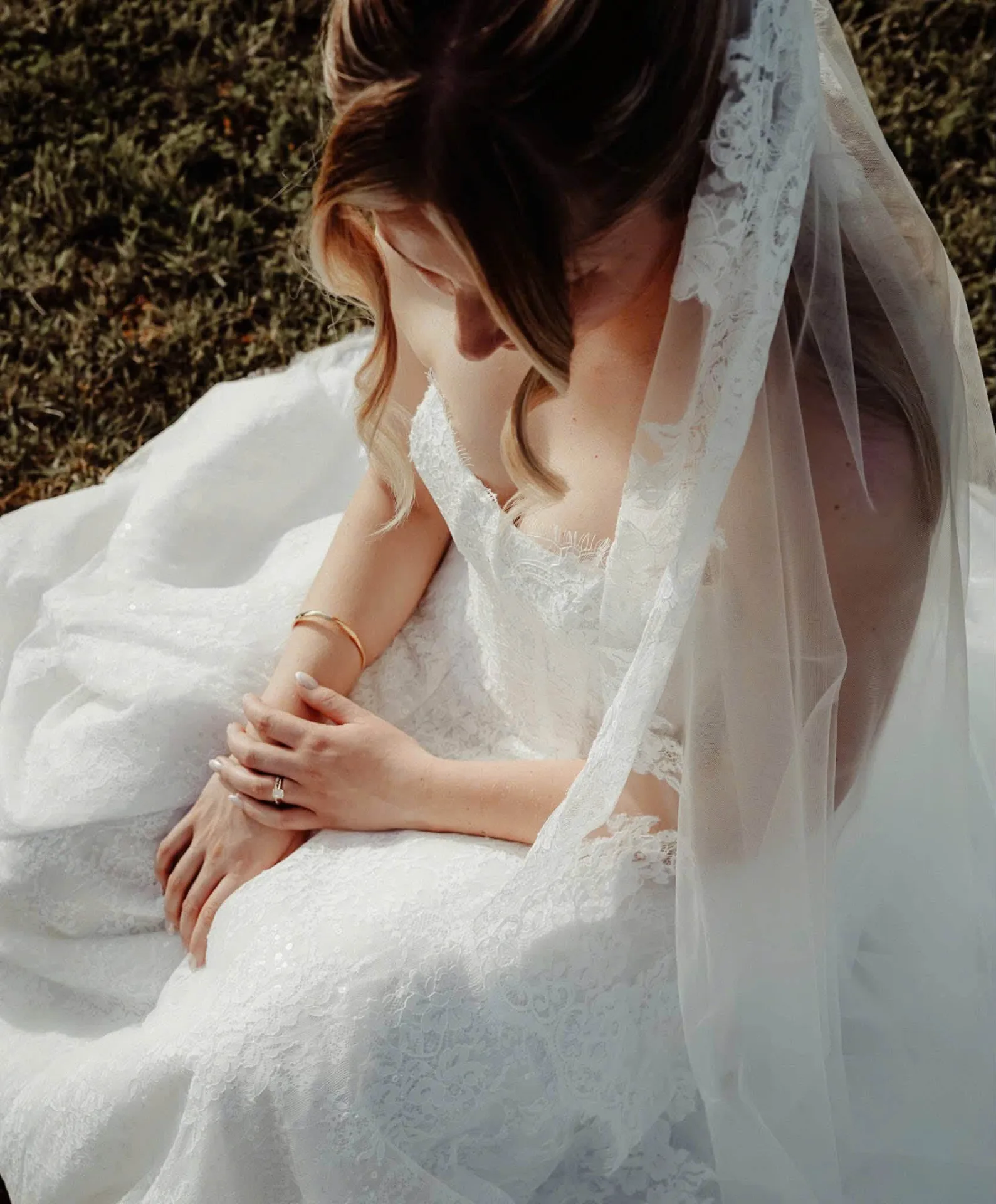
At first glance, wedding dress tailor near me can seem like a simple style decision. In practice, this part of bridal shopping shapes how the bride moves, how the gown photographs and how naturally she can inhabit the day. Uniqueness can come from one proportion, one draped line, a chosen fabric or a neckline that feels completely right. The Maker’s philosophy of balance is useful here.
In a fitting, this should be tested rather than assumed. Look at the gown from the front, side and back, then walk, sit and turn. Notice where the fabric begins to pull, where the waist naturally settles and whether the dress still feels composed once the bride stops holding a perfect pose. The most revealing moment is often not the mirror photograph; it is the first unguarded movement.
Camile offers a useful reference point here. The Maker illustrates this idea in a concrete way: The Maker Collection is built around the creative process itself: sketching, material selection, repeated testing, draping and refinement. Its design language values balance between silhouette, fabric, structure and the emotion of wearing the gown rather than decoration for decoration’s sake. The collection should not be treated as a rule for every bride; it is better used as a visual example of how design choices can be combined with a coherent point of view.
This is where personal taste matters more than any universal formula. A bride may love the very feature another woman would remove. Confidence does not always look quiet; sometimes it looks like volume, sparkle or a neckline that takes up space. The fitting is successful when the design feels intentional on the woman who will actually wear it.
7. Bring references, but explain what you love about them
There is a technical side to wedding dress tailor near me, but there is also an emotional one. A bride is not choosing a diagram; she is choosing the outline she will recognise in photographs years later. A tailor or designer needs to know whether the bride likes the sleeve, waist, texture or movement in a reference. That creates a more original result than asking for a direct copy.
For decision-making, separate what is structural from what is decorative. Structure includes support, waist placement, seam position, skirt weight and movement. Decoration includes lace motifs, flowers, sequins and accessories. A bride can change decoration more easily than she can rescue poor structure, so fit should be evaluated first.
Camile offers a useful reference point here. MUSE illustrates this idea in a concrete way: MUSE Collection is organised around Spring, Summer, Autumn and Winter, using sharply structured corsets, fluid draping, light-catching textures and sculptural silhouettes to express different sides of femininity. The collection should not be treated as a rule for every bride; it is better used as a visual example of how design choices can be combined with a coherent point of view.
There is no need to decide from the first emotional reaction. A bride can take a photograph, step out of the gown, try a contrast and then return. Often the most meaningful design is the one she understands more clearly after comparison rather than the one that creates the loudest first impression.
8. Schedule enough fittings for decisions to settle
The most useful way to think about wedding dress tailor near me is to move beyond rules. Instead of asking what a bride is supposed to wear, ask what the design is doing for proportion, comfort and atmosphere. The first fitting identifies issues; later fittings test the response to changes. Complex work should not be compressed into the final days before the wedding.
The appointment becomes more useful when the bride arrives with a short list of priorities rather than a long list of prohibitions. She might say that she wants strong bust support, a softer upper arm, a lighter skirt or a clean neckline. Those statements give a stylist something constructive to work with and keep the process centred on the bride rather than on generic rules.
Camile offers a useful reference point here. Camile illustrates this idea in a concrete way: Camile Bridal specialises in high-end wedding dress rental and made-to-measure bridal design, with wedding dresses, bigsize bridal options and after-party or vows dresses presented as core services. The collection should not be treated as a rule for every bride; it is better used as a visual example of how design choices can be combined with a coherent point of view.
The language of bridalwear is useful only when it helps the bride articulate preference. Terms such as corset, A-line, tulle or draping are not rules. They are tools for conversation. The goal is not to become an expert in wedding dresses; it is to become precise enough about your own taste that the right people can help you realise it.
9. Know when a new made-to-measure gown is more sensible
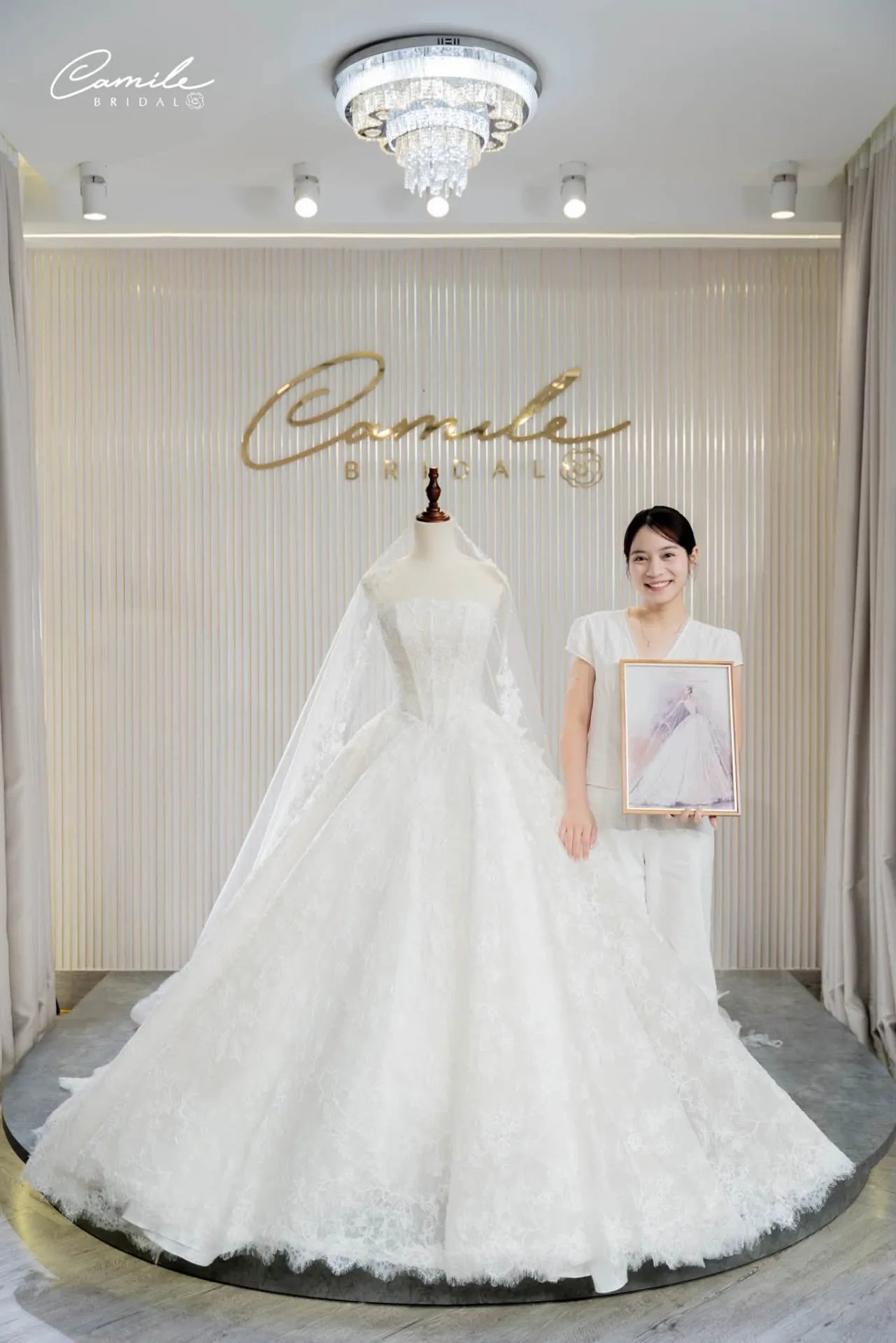
Bridal fashion becomes clearer when the bride stops evaluating isolated details and begins to see the whole composition. With wedding dress tailor near me, that means looking at the relationship between body, fabric, movement and setting. If the dress needs major changes in bodice, skirt, fabric and neckline, the cost and compromise of alteration may exceed the value of designing from the beginning.
Photographs are helpful, but they flatten scale and movement. Whenever possible, the bride should compare the real fabric under daylight and indoor light, examine the finish at seams and closures, and ask how the design changes after alteration. These small observations often tell more about quality than the most dramatic campaign image.
Camile offers a useful reference point here. The Maker illustrates this idea in a concrete way: The Maker Collection is built around the creative process itself: sketching, material selection, repeated testing, draping and refinement. Its design language values balance between silhouette, fabric, structure and the emotion of wearing the gown rather than decoration for decoration’s sake. The collection should not be treated as a rule for every bride; it is better used as a visual example of how design choices can be combined with a coherent point of view.
When this element is right, it usually becomes quiet. The bride stops adjusting the gown, stops asking whether it is flattering enough and begins imagining the day itself. That shift—from analysing the dress to inhabiting the moment—is one of the clearest signs that fit and emotion are beginning to align.
10. Camile Bridal combines collection knowledge with made-to-measure design
A beautiful result rarely comes from one dramatic detail alone. wedding dress tailor near me works when construction, material and the bride’s own energy are speaking the same visual language. Because Camile develops its own collections and offers custom design, brides can discuss both fitting logic and creative direction rather than treating tailoring as a purely technical afterthought.
A good bridal decision should still make sense after the excitement of the fitting settles. Before confirming, the bride can ask herself whether she can imagine greeting guests, sitting through dinner, walking into the ceremony and seeing the dress again in ten years. The right gown should survive both movement and memory.
Camile offers a useful reference point here. Camile illustrates this idea in a concrete way: Camile Bridal specialises in high-end wedding dress rental and made-to-measure bridal design, with wedding dresses, bigsize bridal options and after-party or vows dresses presented as core services. The collection should not be treated as a rule for every bride; it is better used as a visual example of how design choices can be combined with a coherent point of view.
A wedding gown does not need to explain every part of a bride’s personality. It only needs to feel honest. Restraint can be romantic, volume can be elegant, sleeves can be sensual and simplicity can be luxurious. The value lies in whether the choices belong together.
A final decision check before you commit
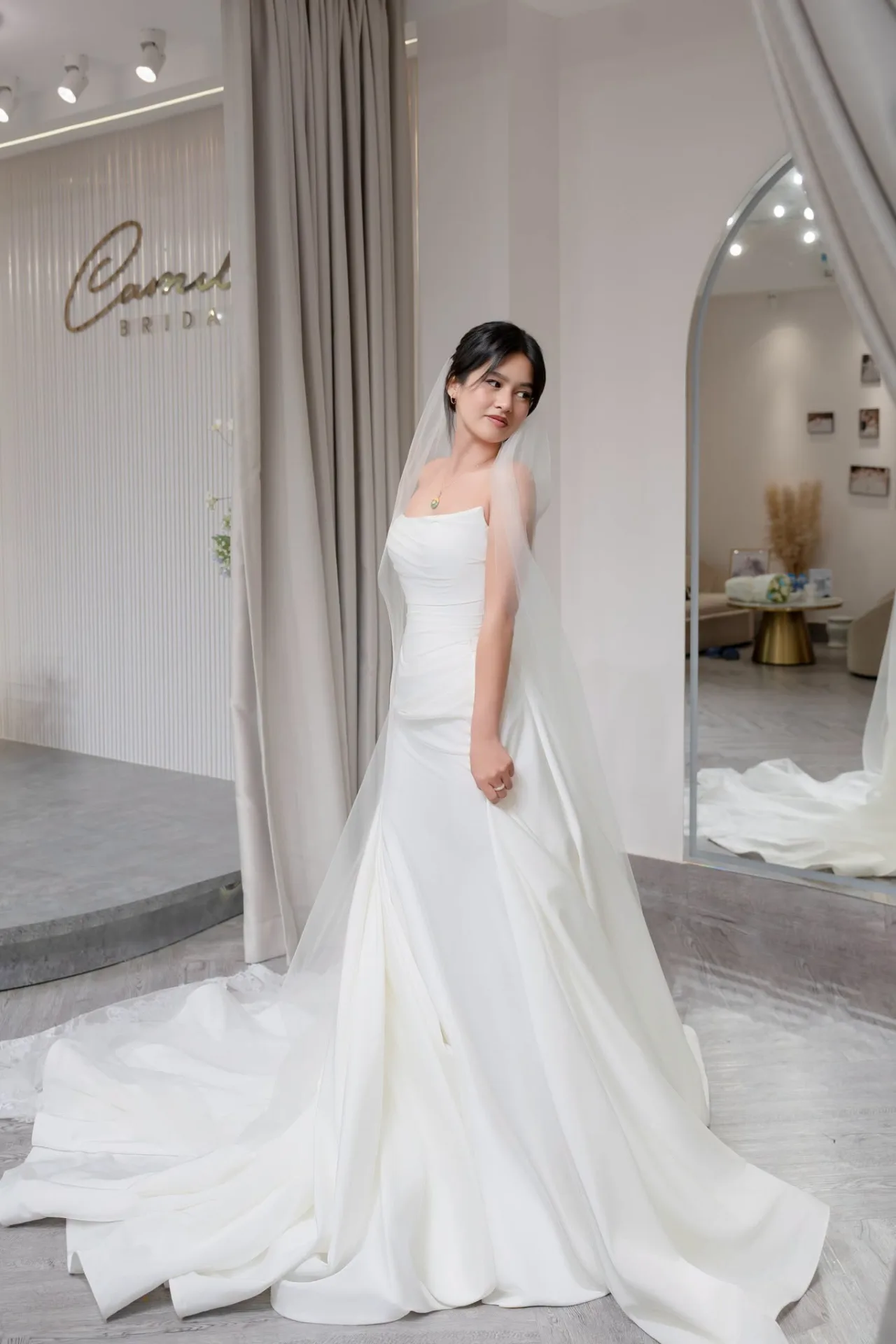
For a bride researching wedding dress tailor near me, one useful exercise is to separate permanent decisions from reversible styling. A veil, earrings or hairstyle can change the mood later, but neckline security, waist placement and skirt movement are structural. Start with the choices that cannot be rescued by accessories and allow the decorative layer to come afterwards.
Frequently Asked Questions
What should I look for first when choosing wedding dress tailor near me?
Begin with structure, comfort and the way the design relates to your actual body. Decorative detail should come after you know the gown can support the wedding day you are planning.
Can wedding dress tailor near me be adjusted to my measurements?
Many designs can be altered, but the amount of change depends on the original structure. Major changes may be better approached through made-to-measure design rather than aggressive alteration.
How early should I start planning wedding dress tailor near me?
Start early enough to compare, fit and make decisions without pressure. Complex custom work and multiple fittings require more time than selecting an existing gown.
How do I compare two wedding dress tailor near me options?
Compare fit, construction, movement, fabric and how clearly each option reflects your wedding atmosphere. Price is meaningful only after the services and alteration scope are understood.
How can Camile Bridal help me decide?
You can use a fitting to compare silhouettes and collection directions, then discuss whether an existing gown, rental option or made-to-measure design best matches your priorities.
Conclusion
The search for wedding dress tailor near me becomes much easier when the bride stops trying to find a universally correct answer. The right choice is the one where silhouette, fabric, support, movement and personality begin to feel coherent rather than negotiated.
Camile Bridal’s collections offer several distinct ways into that feeling: MUSE for multifaceted sculptural femininity, The Maker for craft and restraint, Alicia for movement, Calista for fairytale grandeur, La Rosé for floral romance, Catherine for timeless lace, Scarlett for regal confidence and the dedicated bigsize line for brides who need proportion and support to be addressed with respect.
The final decision should make the bride feel more like herself, not more like an image she has been told to imitate. If an existing gown creates that feeling, let it. If it needs a different proportion, neckline, sleeve, fabric or structure, a made-to-measure conversation can begin from there.
| Discover wedding dress tailor near me with Camile Bridal
Save three to five designs that genuinely interest you and bring the reasons with you: the neckline, the movement, the fabric, the waist or simply the feeling. A focused reference is more useful than a folder of fifty unrelated photographs. At Camile Bridal, brides can explore high-end wedding dress rental, existing collection pieces and made-to-measure design. The consultation can begin with the gown you love and then move into the details that make it yours. CAMILE BRIDAL – DESIGNER & MADE-TO-MEASURE WEDDING DRESSES |